Closed-Cell Spray Foam Insulation
Closed-cell spray foam packs roughly R-6 to R-7 per inch into tight framing cavities, adding structural rigidity and a genuine moisture barrier for Durango homes built for real Rocky Mountain winters.
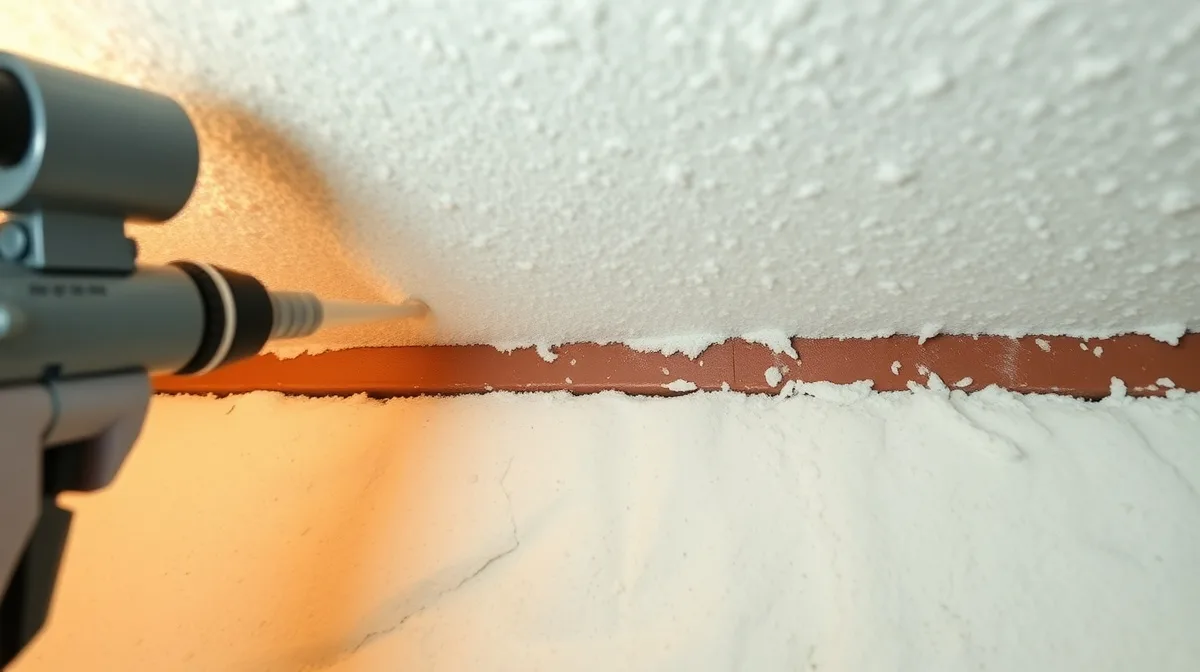
Durango's building stock includes plenty of standard 2x4 and 2x6 framing, but it also includes a real, active segment of log and timber-frame construction — cathedral ceilings, exposed post-and-beam roof assemblies, and irregular cavities that a straight fiberglass batt was never designed to fit. At 6,512 feet, in IECC Climate Zone 5B, closed-cell spray foam earns its place in both kinds of construction because it's the densest common insulation material available, rated at roughly R-6 to R-7 per inch — nearly double open-cell foam's R-3.5 to R-3.7 per inch, and well ahead of fiberglass batts' real-world R-2.9 to R-3.8 per inch once air gaps and settling are counted. That density matters most exactly where framing depth is limited: a standard wall cavity, a shallow rim joist, or a low-clearance crawl space, where there simply isn't room for a lower-density material to reach La Plata County's R-20 wall target.
Closed-cell foam also cures into a rigid, adhered layer rather than a loose-fill material, which is a genuine advantage for the post-and-beam and irregular roof assemblies common to the area's log and timber-frame builders. It fills gaps between round logs, angled rafters, and non-standard framing the way batts simply cannot, while bonding structurally to the sheathing and framing it's applied against. It's also close to vapor-impermeable once cured, which makes it the right call anywhere ground moisture, snowmelt, or wind-driven moisture is a realistic risk — foundation walls, rim joists, and any roof deck exposed to the freeze-thaw cycles a Durango winter puts a building through.
Why homeowners choose it
- Delivers roughly R-6 to R-7 per inch — close to double open-cell foam's R-value — making it the practical choice anywhere framing depth is limited.
- Fills irregular cavities, angled rafters, and gaps around round-log or post-and-beam framing that batts and loose-fill material can't conform to.
- Cures into a rigid, adhered layer that bonds structurally to sheathing and framing, a genuine asset under sustained mountain snow loads.
- Acts as a true moisture barrier once cured, resisting ground dampness, snowmelt, and wind-driven moisture far better than batts or loose-fill.
- Air-seals and insulates in one application, closing the small penetrations and gaps that drive cold-air infiltration in a genuine mountain winter.
- Doesn't absorb water or lose R-value the way fiberglass and cellulose can after freeze-thaw exposure, so performance holds up over the long term.
Why Density Wins in a Zone 5B Assembly
La Plata County's adopted 2021 IECC amendment calls for R-49 attic assemblies and R-20 wall assemblies — numbers set because Durango is a genuine cold-winter, high-elevation climate. Hitting those targets inside a standard wall cavity depends entirely on how much R-value the material delivers per inch of available space. Closed-cell spray foam's R-6 to R-7 per inch means a standard cavity filled with closed-cell foam can meet or exceed the R-20 wall target outright, where fiberglass or cellulose at R-2.9 to R-3.8 per inch would need far more depth than the framing provides.
This is why closed-cell foam is the default choice for rim joists, band joists, and any tight cavity where a Durango home historically loses the most heat. For homeowners chasing a higher-performance envelope than code minimum, closed-cell's density is also what makes an R-49 to R-60 attic assembly achievable without absurd roof-deck thickness.
- R-6 to R-7 per inch versus R-3.5 to R-3.7 for open-cell foam and R-2.9 to R-3.8 for fiberglass batts in real-world conditions
- Meets La Plata County's R-20 wall target inside standard framing depths
- Well suited to rim joists, band joists, and other shallow cavities
- Makes an R-49 to R-60 attic upgrade practical for homeowners chasing maximum performance
Built for Log and Timber-Frame Construction
Durango and the surrounding San Juan Mountains region is genuine log and timber-frame building country — builders like DC Builders, PrecisionCraft, Durango-headquartered Log Homes of the South, Integrity Timber Frame, and Frontier Log Homes all serve this market actively. That style of construction produces cathedral ceilings, exposed post-and-beam roof structures, and round-log or hewn-timber wall assemblies with irregular, non-rectangular cavities — exactly the geometry a fiberglass batt handles worst.
Closed-cell foam expands to conform to those irregular shapes and bonds directly to the substrate, whether that's dimensional lumber, structural insulated panels, or the underside of a timber-frame roof deck. It fills the gaps a batt would leave as voids without needing custom-cut pieces for every angle, which is a real, practical advantage for this kind of build rather than a generic selling point.
- Conforms to cathedral ceilings and irregular post-and-beam roof cavities
- Fills gaps around round-log and hewn-timber framing without custom-cut batt pieces
- Bonds structurally to dimensional lumber, SIPs, and timber-frame roof decking
- A practical fit for the area's active log and timber-frame building market
A Genuine Moisture Barrier for Freeze-Thaw Conditions
January in Durango averages around a 38°F high and 12°F low, and that swing across the freezing point, repeated through the winter, is exactly the kind of freeze-thaw cycling that pushes moisture into building assemblies. Closed-cell spray foam's cell structure is effectively closed off once cured, giving it very low water absorption and near-vapor-impermeable performance compared to open-cell foam, fiberglass, or cellulose, all of which can hold moisture and lose R-value if they get wet.
That makes closed-cell the right call anywhere ground moisture, wind-driven snow, or ice-dam-related water intrusion is a realistic risk: crawl spaces, foundation walls, rim joists, and unheated garages built on grade. It also protects the investment itself — because the material doesn't absorb water and settle the way fiberglass batts or blown cellulose can, its R-value and air-seal hold up over the long term instead of degrading after years of freeze-thaw exposure.
- Near-zero water absorption once fully cured
- Protects rim joists, foundation walls, and crawl spaces from snowmelt and ground moisture
- R-value doesn't degrade from moisture exposure the way batts or cellulose can
- Reduces the risk of moisture-related wood rot in framing over time
Ideal for
- Log and timber-frame homes with cathedral ceilings, exposed post-and-beam roof assemblies, or irregular framing cavities
- Rim joists, band joists, and other shallow-depth framing where R-value per inch is the deciding factor
- Foundation walls and crawl spaces exposed to ground moisture or seasonal snowmelt
- Standard 2x4 exterior walls where hitting La Plata County's R-20 wall target needs the most R-value available in limited depth
- New-construction and major remodel projects built for genuine four-season mountain performance
What affects the cost
Closed-Cell Foam questions, answered
Closed-cell foam delivers roughly double the R-value per inch of open-cell foam, which matters most where framing depth is limited, such as standard wall cavities or rim joists. It also adds structural rigidity and blocks moisture, making it the better choice anywhere freeze-thaw cycling or snowmelt intrusion is a factor.
Not necessarily. Many Durango homes use closed-cell foam in rim joists, crawl spaces, and exterior walls where density and moisture resistance matter most, while open-cell foam handles interior walls and conditioned attic spaces where sound-dampening and cost efficiency are the priority. A free on-site assessment can determine the right mix for your assembly.
Yes — it's one of the better material choices for that kind of build. Closed-cell foam expands to fill the irregular cavities around round logs, hewn timbers, and post-and-beam roof framing that a fiberglass batt can't conform to, and it bonds structurally to the surfaces it's applied against.
Closed-cell foam's R-6 to R-7 per inch makes it one of the most efficient ways to hit the county's R-20 wall target and R-49 attic target within standard framing depths, without needing extra framing thickness. It's also the practical choice if you want to push toward an R-49 to R-60 attic upgrade beyond code minimum.
Closed-cell installations generally fall toward the higher end of the typical $0.75 to $4.50 per square foot installed range for spray foam, reflecting its greater density and R-value. Actual pricing depends on square footage, cavity depth, and site conditions, so we provide a firm number after a free on-site assessment.
Closed-Cell Foam done right, by a local Durango crew
Closed-Cell Foam isn't a commodity — the result depends entirely on how carefully it's planned and installed for your specific home and Durango's real high-country climate. We assess what your house actually needs, prep and air-seal properly, and install to your elevation-appropriate R-value target, so the work delivers the comfort and savings it's supposed to.
We serve Durango, Bayfield, Vallecito Lake, Hermosa, Mancos, Hesperus, and Ignacio. Every job starts with a free, no-pressure quote.
Just as important, we treat your home like the system it is. Insulation, air sealing, and ventilation all interact, and getting one right while ignoring the others leaves comfort and savings on the table. When we scope your closed-cell foam, we look at how it fits the whole picture — so the finished result performs the way it should, holds up through a genuine Durango winter, and actually lowers the bills you feel every month.
Free assessment
We evaluate your home and give you a clear, itemized quote.
Expert install
We prep, air seal, and install your closed-cell foam to spec — clean and on schedule.
Savings you can feel
A warmer home, lower heating bills, and honest advice about what your home needs.
Related services
Ready for a free closed-cell foam quote?
Tell us about your home and we'll put together a clear, no-pressure spray foam insulation quote — built for Durango's real mountain winters.